
Bathrooms are becoming more intentional.
For years, vanities were treated as decorative furniture placed inside a room. Now, they’re becoming more architectural — integrated, deliberate, and considered as part of the overall composition.
I’ve been paying close attention to this shift. Some of it feels enduring. Some of it feels momentary.
Here’s what I’m seeing — and what I believe will last.
The Move Toward Architectural Simplicity
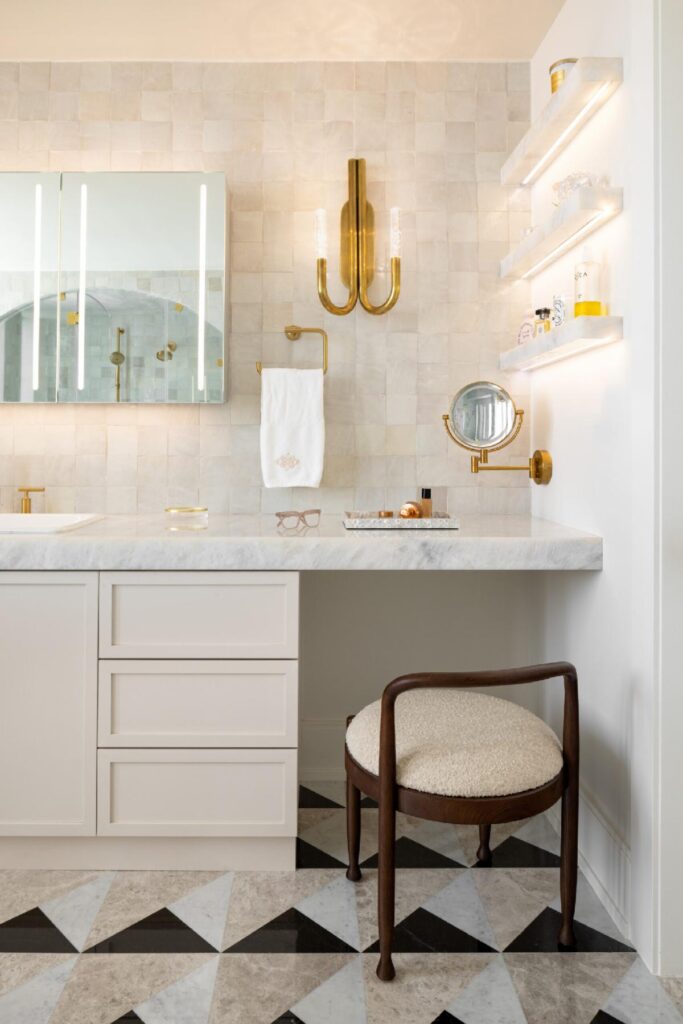
We’re seeing fewer ornate profiles and more restrained silhouettes.
Flat-front cabinetry. Integrated pulls. Touch-latch systems. Wide drawers replacing compartmentalized doors.
This shift isn’t driven by minimalism, but by a desire for visual clarity.
Wide drawers function better. They reduce visual interruption and allow the cabinetry to read as a cohesive plane rather than a series of parts.
Visible hardware isn’t inherently wrong. But overly decorative pulls can quickly anchor a space to a specific moment in time. When the millwork itself is strong, it doesn’t need embellishment.
Lighting That Feels Layered, Not Theatrical
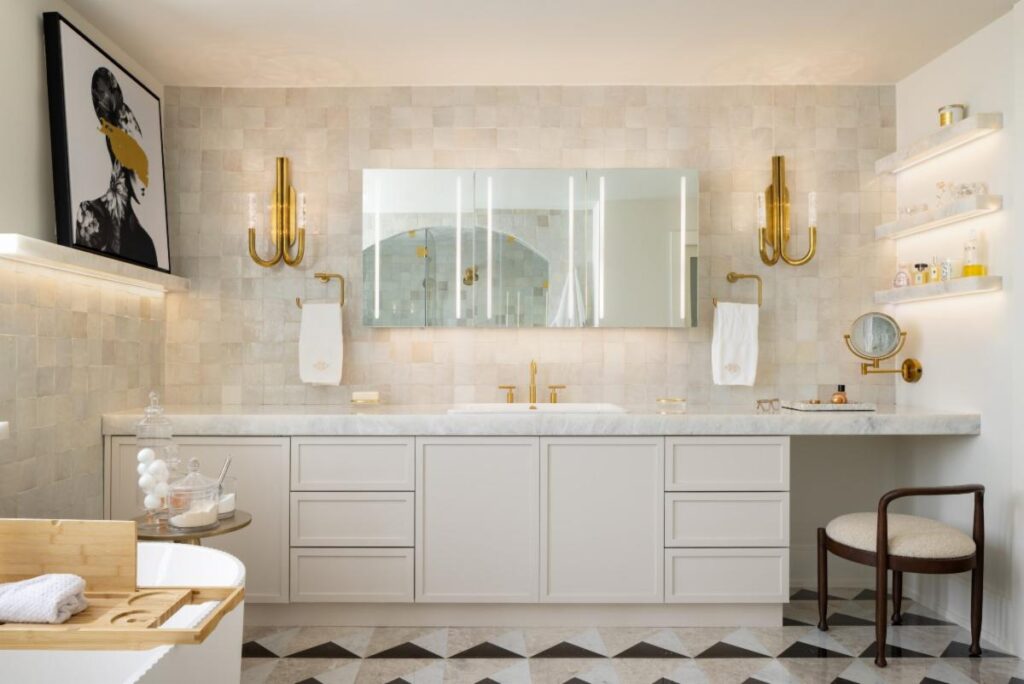
What endures is layered light.
Concealed LED integrated into millwork. Subtle toe-kick lighting. Vertical sconces that illuminate evenly rather than casting shadows from above.
The most compelling bathrooms I’ve studied — whether in older European residences or contemporary homes — rely on restraint. Nothing flashy. Just thoughtful placement.
When lighting is integrated into the architecture, the room feels intentional rather than staged.
Stone as Surface, Not Spectacle
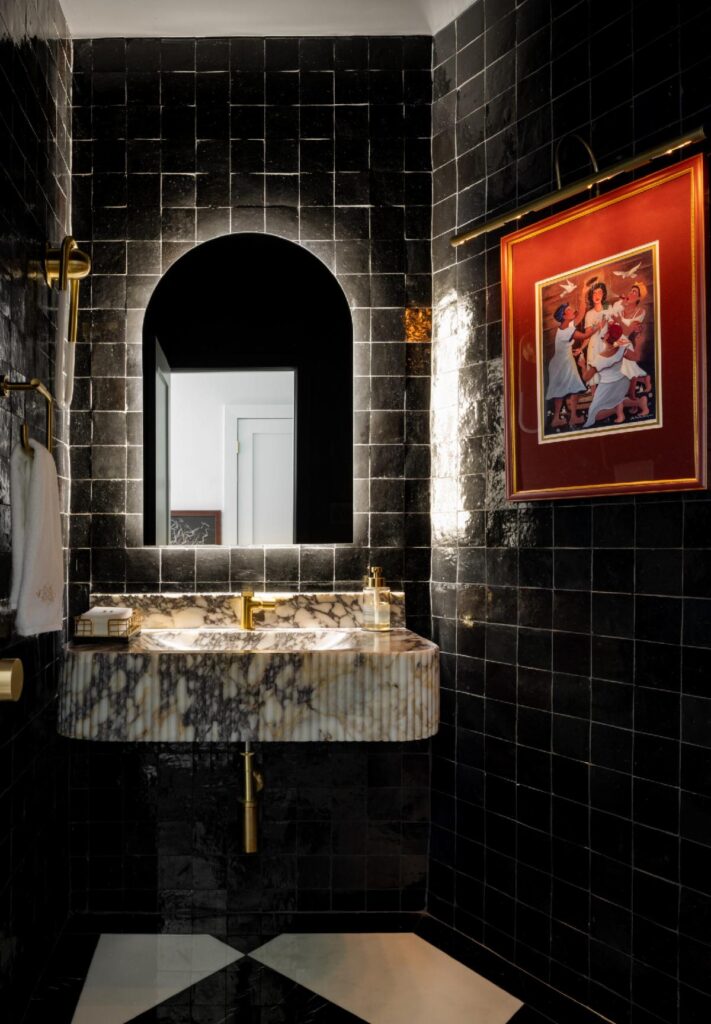
Stone remains central to vanity design, but its application — and its authenticity — matter.
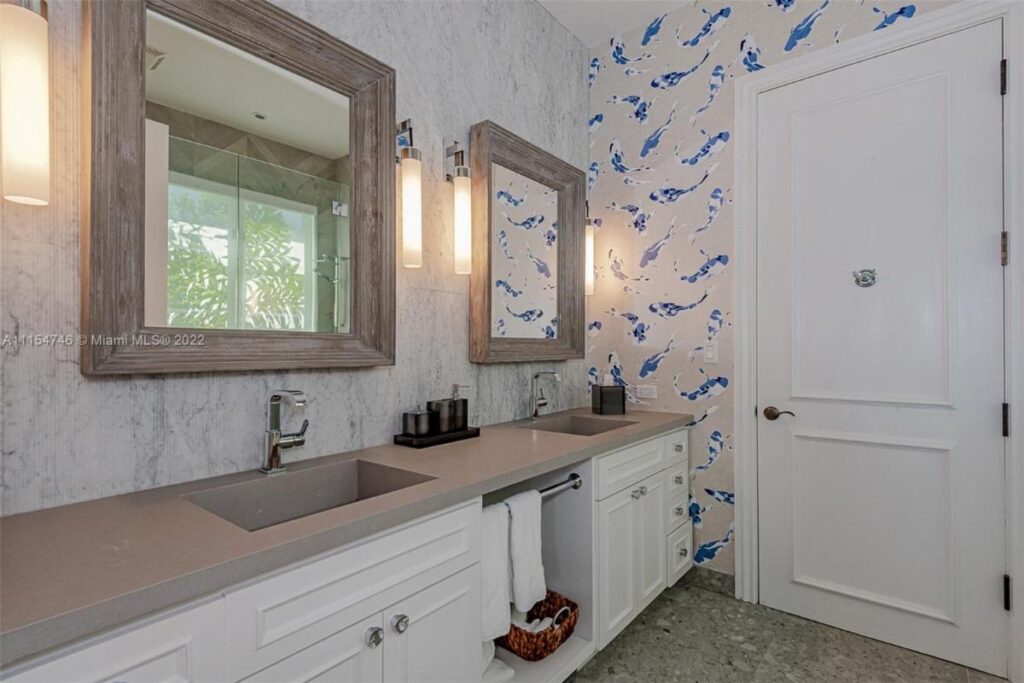
Manufactured slabs surged in popularity for their uniformity and low maintenance. Yet over time, many heavily patterned versions reveal themselves. The repetition can feel artificial, and in certain applications, the scale of the veining competes with the architecture rather than supporting it. There have also been increasing concerns within the industry about the health implications for fabricators working extensively with high-silica engineered products — a reminder that material selection carries broader responsibility.
That doesn’t mean bold veining is off the table. In the right space — particularly when the architecture is quiet and the proportions are strong — dramatic stone can be extraordinary.
What I gravitate toward is intention. Natural stone with depth and variation that feels inherent rather than printed. Honed finishes. Clean mitered edges. Sculpted profiles that feel tailored rather than heavy.
These decisions may seem subtle, but they are often what separate custom from commonplace.
Wellness Without Excess
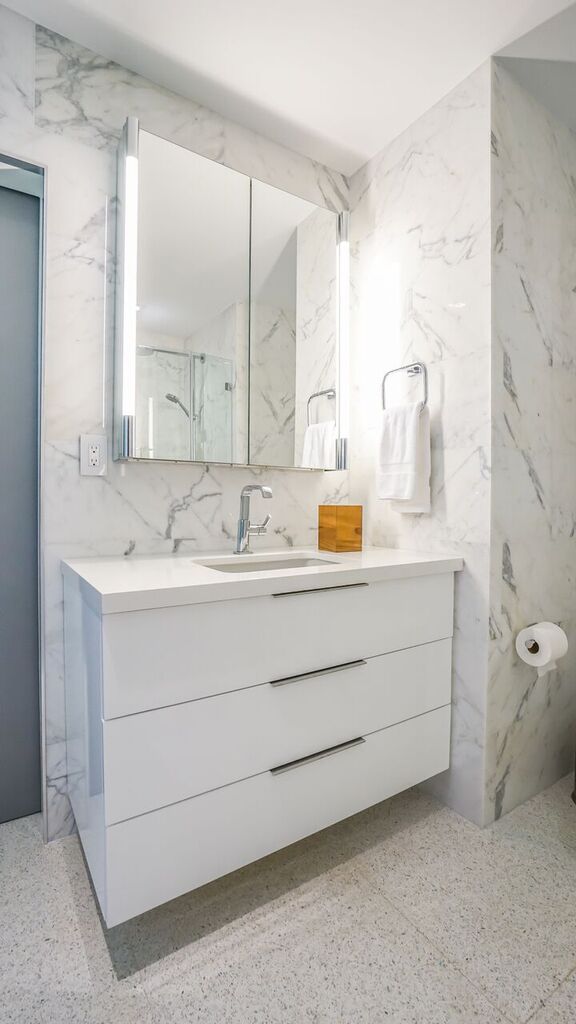
There’s increasing interest in wellness-centered bathrooms — and thoughtfully so. In practical terms, that means a space designed around how you actually move through it each day.
Clear counter space. Storage that keeps essentials contained but within reach. Lighting that shifts from bright and functional in the morning to softer and more ambient in the evening.
In a recent project, I integrated a steam component into a primary shower and red light within a custom sauna. When incorporated thoughtfully, these elements can enhance the experience rather than dominate it.
Wellness isn’t created by layering in features for the sake of it. It’s created by proportion, light, material and thoughtful restraint.
Integrated storage that reduces countertop clutter. Drawers designed around daily ritual. Lighting that transitions from task-oriented to ambient as the day shifts.
A well-designed vanity should support daily rhythm. It should feel calm at 6 a.m. and equally composed at 10 p.m.
Function, when resolved with intention, becomes luxury.